How to Build an Authentic Purpose-Driven Culture: A Practical Guide to Aligning Leadership, People Processes, and Impact Metrics
Purpose-driven culture is more than a slogan on the office wall — it’s an operating system that ties strategy, employee experience, and customer value to a clear, meaningful mission. Organizations that cultivate authentic purpose tap into higher engagement, stronger retention, deeper customer loyalty, and better long-term performance.
What a purpose-driven culture looks like
– Clear, actionable mission: Everyone can explain how their work contributes to the organization’s purpose.
– Leadership alignment: Leaders model decisions that prioritize purpose alongside profit.
– Everyday rituals: Meetings, onboarding, performance reviews and recognition reflect purpose-driven behaviors.
– Transparency and accountability: Goals and outcomes tied to purpose are visible and measurable.
Why purpose matters
– Employee engagement: People who feel their work is meaningful are more motivated, creative, and committed.
– Talent attraction and retention: Purpose helps differentiate an employer in a competitive market and reduces turnover.
– Customer trust: Consumers increasingly choose brands with authentic commitments to social and environmental value.
– Strategic clarity: Purpose provides a north star for product decisions, partnerships, and resource allocation.
How to build an authentic purpose-driven culture
1. Define a concise, action-oriented purpose
Avoid vague platitudes. A strong purpose states who you serve, the change you seek to create, and the unique approach you bring. Test it with frontline teams — if they can’t translate it into daily actions, refine the language.
2.
Operationalize purpose through goals
Translate purpose into measurable objectives: product features that deliver social impact, hiring targets that increase diversity, or service standards that improve access. Embed these objectives in strategy documents, OKRs, and budgets.
3. Align leadership and governance
Leaders must make trade-offs that show purpose is real: funding initiatives that prioritize impact, balancing short-term financial targets with long-term mission investments, and holding peers accountable for purpose metrics.
4. Build purpose into people processes
Recruit for mission fit, not just skill. Include purpose-related criteria in onboarding, performance reviews, and promotion decisions. Recognize and reward behaviors that advance the mission.
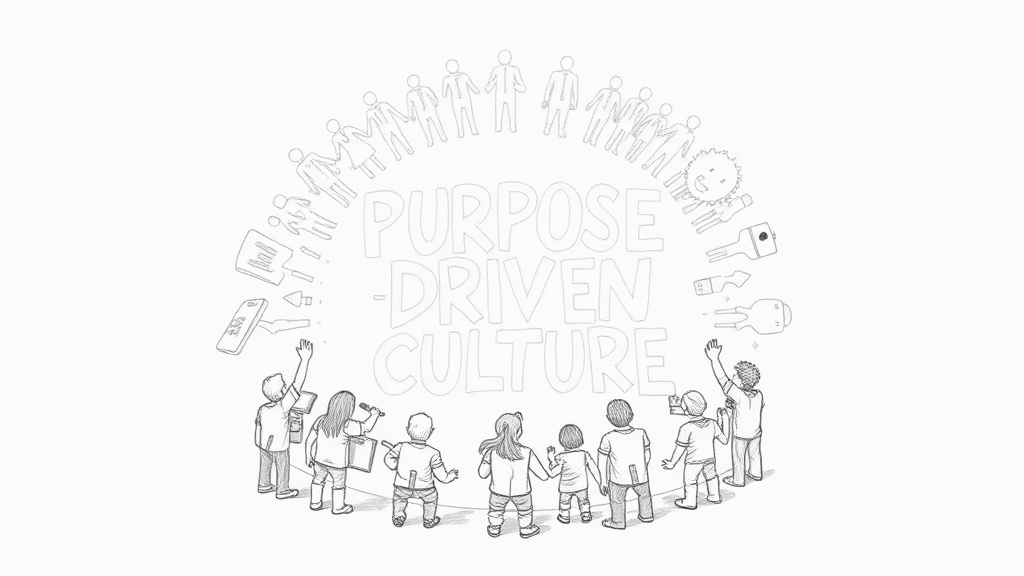
5. Create everyday rituals and storytelling
Share stories of people and teams living the purpose. Use internal comms, town halls, and newsletters to spotlight impact. Rituals like purpose-focused kickoffs or cross-team impact reviews keep momentum alive.
6. Measure what matters
Track employee net promoter score (eNPS), retention in mission-critical roles, customer loyalty metrics, impact KPIs (e.g., emissions reduced, people served), and brand trust indicators. Use those insights to iterate.
Common pitfalls to avoid
– Performative purpose: Public-facing statements without internal alignment breed cynicism.
Action must match messaging.
– One-off initiatives: Sporadic programs won’t change culture. Purpose needs institutionalized practices and investments.
– Top-down mandates: True purpose grows when employees are invited to co-create it, not just told to follow it.
– Lack of measurement: If you don’t measure purpose-driven outcomes, they tend to be deprioritized.
Quick starter checklist
– Run a cross-functional purpose workshop to align mission and metrics.
– Audit talent processes for purpose alignment (hiring, onboarding, performance).
– Launch a pilot program that demonstrates measurable impact within three to six months.
– Establish a monthly purpose dashboard for leaders and teams.
Purpose-driven culture is an ongoing commitment. When leaders connect everyday work to a meaningful mission—and back that connection with structures, rewards, and transparent measurement—they create an environment where people do their best work, customers feel understood, and the organization can sustain performance through change.