Why Jamie Horowitz and Peyton Manning Invested in FanDuel’s 70-Region Production Network
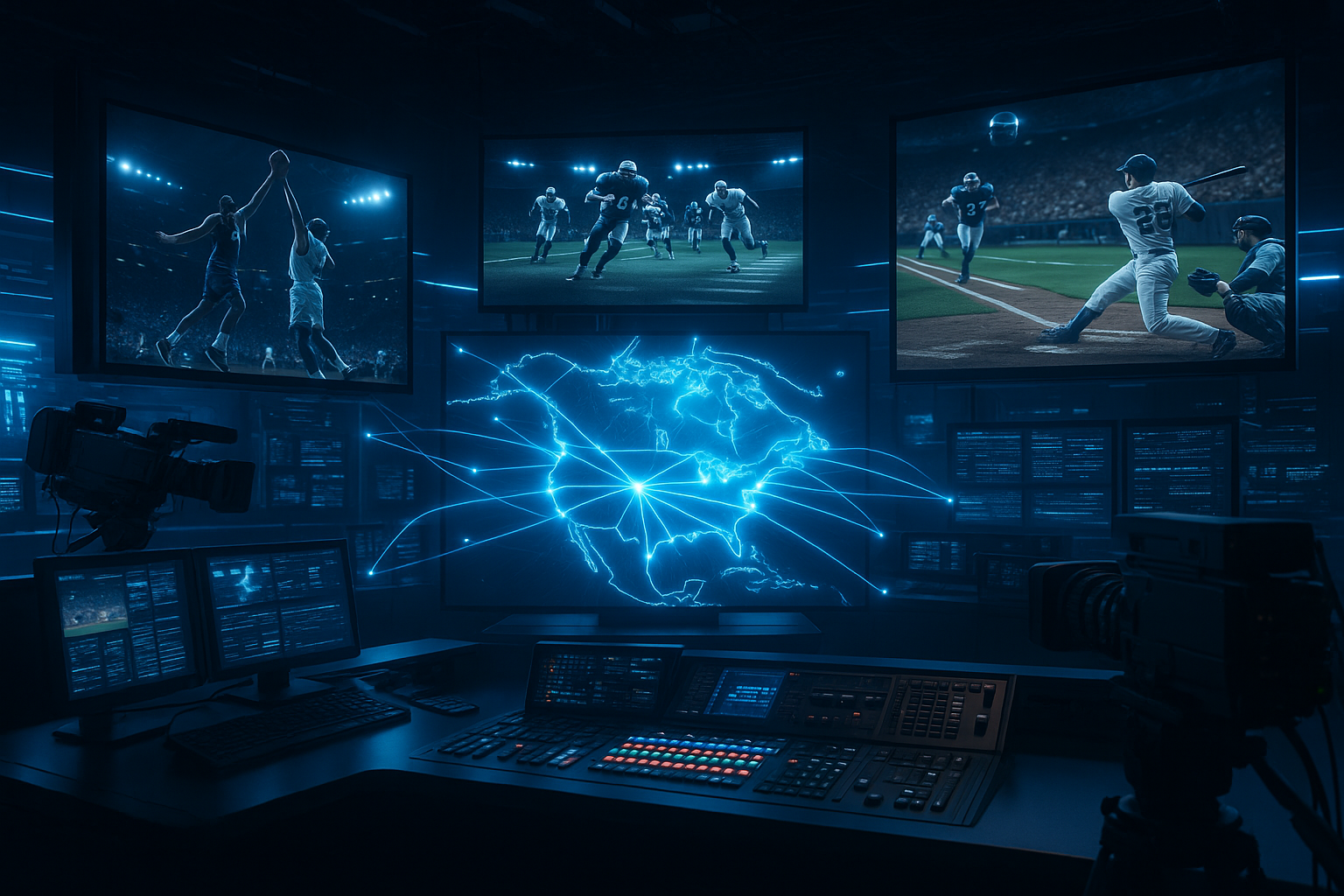
Omaha Productions—the sports media company co-founded by NFL Hall of Famer Peyton Manning and television executive Jamie Horowitz—announced an equity investment in Main Street Sports Productions on May 12, 2025. Main Street is a new production division launched by FanDuel Sports Network. Omaha acquired ownership stakes in production infrastructure spanning more than 70 regions across North America, alongside creative partnership rights to develop original content.
Horowitz structured the partnership as an equity play rather than a traditional content licensing agreement. Omaha now owns partial stakes in FanDuel’s production apparatus and will benefit from both its own projects and Main Street’s client services revenue.
What Main Street Sports Productions Actually Does
Main Street Sports Productions provides production-as-a-service to professional teams, college conferences, leagues, streaming platforms, and corporate brands. Jeff Rosser leads the division as senior vice president and general manager, bringing experience from his previous role as senior vice president of production at Diamond Sports Group.
FanDuel Sports Network operates 17 regional sports networks covering NBA, NHL, and MLB teams. Those networks reach approximately 70 million households and produce over 1,600 live regional sports games annually. Main Street will leverage cameras, crews, facilities, and regional relationships already in place for game broadcasts—expanding them into documentaries, shoulder programming, and branded series.
“Producing over 1,600 live regional sports games per year across 17 regional sports networks has afforded FanDuel Sports Network a competitive edge in sports production,” said Michael Taub, head of FanDuel Sports Network. “Main Street Sports Productions allows us to utilize this infrastructure to further our investment in the sports market and create opportunities for professional and college teams, leagues, and brands to collaborate on content creation.’
What Taub did not say: FanDuel already pays for those 1,600+ broadcasts whether or not Main Street exists. Every camera, crew member, and facility rental for live games creates a sunk cost. Main Street monetizes excess capacity—selling production hours to third-party clients during periods when equipment and personnel would otherwise sit idle.
Why Building Production Infrastructure Makes No Financial Sense
Building national production capacity independently would require tens of millions in capital expenditure. Regional production facilities equipped for broadcast-quality capture, multi-camera setups, and live transmission carry fixed costs that most content studios cannot justify unless operating at scale.
FanDuel already carries those costs to support game broadcasts. Main Street monetizes excess capacity by selling production services to third-party clients—teams wanting documentary series, leagues creating shoulder content, brands developing athlete-driven campaigns.
Horowitz’s equity stake allows Omaha to access this infrastructure while participating in Main Street’s revenue growth as it books external clients. Omaha also gains embedded production teams in 70+ markets—personnel already credentialed with local teams, familiar with venue logistics, and experienced in capturing live sports content.
Consider Omaha’s existing production needs. Netflix docuseries like Quarterback and Receiver require embedded camera crews following athletes throughout the season. ESPN’s Full Court Press demands access to college basketball programs during games, practices, and travel. Regional infrastructure allows Omaha to deploy crews faster, reduce travel costs, and maintain relationships with local teams and venues that might otherwise require months of negotiation for each project.
But here’s the tension Horowitz must now manage: Main Street needs external clients to generate revenue. Those clients—professional teams, college conferences, streaming platforms—compete for the same production slots, crew availability, and venue access that Omaha’s projects require. If Main Street succeeds commercially, Omaha may find itself competing internally for its own infrastructure.
Horowitz’s Pattern: Finding Value in Assets Others Overlook
Horowitz built his career identifying assets that incumbents undervalue, then repurposing them for new formats.
At ESPN in the early 2010s, debate segments on shows like First Take consistently outperformed traditional highlight packages and panel discussions in ratings. Rather than treat debate as one element among many, Horowitz restructured First Take to center entirely on argument-driven content. Skip Bayless and Stephen A. Smith became the show’s architecture, not its decoration. First Take became ESPN’s most-watched daytime program and established a blueprint that competitors—including Fox Sports’ Undisputed and FS1’s First Things First—later imitated.
At Fox Sports, Horowitz championed personality over analysis. Skip Bayless and Shannon Sharpe on Undisputed, Colin Cowherd on The Herd—these shows prioritized opinion and cultural commentary over play breakdowns, attracting younger demographics during Horowitz’s tenure.
At Omaha Productions, Horowitz recognized that athletes—particularly quarterbacks with deep NFL relationships—could serve simultaneously as documentary subjects and executive producers. Quarterback on Netflix followed Patrick Mahomes, Kirk Cousins, and Marcus Mariota throughout the 2022-23 season, garnering 21.4 million view hours in its first week. Manning’s involvement as executive producer opened doors that traditional documentary producers could not access—convincing coaches to allow embedded camera crews, persuading quarterbacks to wear microphones during games, and securing NFL approval for unprecedented in-season access.
FanDuel built expensive production facilities for live games but lacks the creative expertise to monetize them for original content. Horowitz brings that expertise—plus Manning’s talent relationships and Omaha’s proven documentary formats—while FanDuel provides infrastructure that would otherwise require massive capital investment. Whether this solves FanDuel’s RSN profitability problem or simply creates another content studio competing in an already crowded market remains unclear.
Three Assets Omaha Gains Beyond Cameras and Crews
Main Street gives Omaha advantages beyond production facilities:
Market access. Regional sports networks maintain relationships with local professional teams, college athletic departments, and minor league organizations. Years of game broadcasts create entry points for documentary projects that might otherwise require months of cold outreach and negotiation. A crew that shoots 41 NBA home games per season knows which assistant coaches grant access, which players avoid cameras, which arena security protocols exist.
Talent pipeline. FanDuel’s 1,600+ annual broadcasts expose production crews to athletes, coaches, and sports executives across multiple markets. Main Street staff can identify compelling personalities and storylines before they achieve national prominence—creating opportunities for Omaha to develop content around emerging athletes rather than competing for access to established stars. Kirk Cousins appeared in Quarterback Season 1 when he played for Minnesota. By Season 2, he had moved to Atlanta. Regional crews already embedded in both markets captured that transition.
Cost arbitrage. Deploying crews from existing regional facilities reduces travel expenses, equipment rental costs, and crew mobilization time. When Omaha produces multiple concurrent projects—currently active series run on Netflix, ESPN, Hulu, and Vice—these efficiencies compound across the production slate. But cost savings depend on availability. If Main Street books a Nashville crew for a college football documentary the same week Omaha needs coverage of the Tennessee Titans, someone pays for a second crew or delays production.
“We are thrilled to be equity investors in Main Street Sports Productions and have the opportunity to work closely with the incredible leadership team at FanDuel to make compelling content together,” Horowitz said in the announcement.
Omaha Productions: Four Years, $800 Million Valuation
Peyton Manning and Jamie Horowitz founded Omaha Productions in December 2020. Monday Night Football with Peyton and Eli—commonly known as the ManningCast—launched six months later and established the company’s creative identity: personality-driven sports content that prioritizes entertainment and authenticity over traditional analysis. The show has won the Sports Emmy Award for Outstanding Live Series in each of its first three seasons and averages 1.6 million viewers per broadcast.
Peter Chernin’s North Road made a minority investment in 2023, valuing Omaha at approximately $400 million. Patrick Whitesell’s Silver Lake-backed venture added capital in March 2025, with industry reports suggesting a valuation exceeding $800 million. Omaha also signed a first-look scripted television deal with Disney’s 20th Television this year, expanding beyond unscripted sports content into narrative programming.
Current production slate includes Netflix’s Quarterback Season 2, ESPN’s Full Court Press Season 2 (women’s college basketball), Hulu’s upcoming comedy Chad Powers starring Glen Powell, and Vice’s Razor’s Edge following Arkansas basketball coach John Calipari. The Main Street investment adds production infrastructure to support this expansion—assuming Omaha can navigate the resource allocation conflicts that come with shared facilities.
Can Main Street Save Regional Sports Networks?
FanDuel and Omaha announced their partnership during a brutal period for regional sports networks. Diamond Sports Group—which operates Bally Sports-branded RSNs—filed for bankruptcy in 2023. Sinclair Broadcasting has struggled with debt related to its RSN acquisitions. Cord-cutting has eroded subscriber bases, forcing RSNs to explore new revenue models beyond traditional cable carriage fees.
Main Street attempts to diversify revenue by monetizing existing infrastructure through content services. Rather than relying solely on distribution fees and advertising tied to live games, FanDuel can now generate production revenue from teams, leagues, and brands seeking original sports content.
Professional teams and college conferences get turnkey production capacity without the capital expense of building proprietary studios. A mid-market NBA team wanting a documentary series about its players can contract with Main Street rather than hiring freelance crews or negotiating with traditional production companies. Brands get access to athlete talent and sports venues that typically require lengthy negotiations and multiple intermediary relationships.
Financial terms of Omaha’s equity stake were not disclosed. However, the structure—equity investment plus creative partnership—suggests that Horowitz negotiated both ownership participation in Main Street’s revenue growth and preferential pricing for Omaha’s own production needs.
Whether this model rescues struggling RSNs or simply creates another content studio competing in an already saturated market depends on execution. FanDuel must book enough external clients to justify Main Street’s operating costs. Omaha must balance its own production needs against Main Street’s client commitments. And both must navigate the reality that regional sports infrastructure—no matter how extensive—cannot solve the fundamental economics of cord-cutting if subscribers continue abandoning cable packages that bundle RSNs.